Best Time For Everest Base Camp with Island Peak Trekking
The best time for EBC trek is Spring (March-May) and Autumn (September – November). During these seasons, the weather remains quite stable with the bearable temperatures. And you will experience the clearest views of the mountains under the crisp sky in the less humid surrounding. During winter lots of snow may make the trails to higher altitudes difficult. Plus, many teahouses may remain closed in the higher altitudes. During summer, the trail becomes wet because of rain. And the dense fog may obstruct the mountain views. Despite tougher climatic conditions, if you pack well and make yourself ready to face any hurdles then you can trek in these off-seasons as well. So, the trek to EBC is doable all year round.
Everest Base Camp with Island Peak Trek Difficulty
In fact, Mt. Everest is the highest mountain in the world and trekking to its base camp is an adventure in itself. Trekking to Everest Base Camp requires a good level of fitness and strong determination to challenge the changing mountain weather. On this trek, you will ascend to the maximum height 5555 meters at Kala Patthar. So, there could be many instances of altitude sickness. And, since the mountain weather is quite unpredictable you may witness varying and unfavorable weather conditions that may add hurdles to your trek. Plus, the mountainside routes are full of boulders and the rugged terrains with the sloppy terrains and uphill climbs. The geography, weather and altitude may create difficulty to the trek. But if you prepare well and come physically and mentally prepared then you can beat any type of difficulty on the trek.
Why Everest Base Camp with Island Peak?
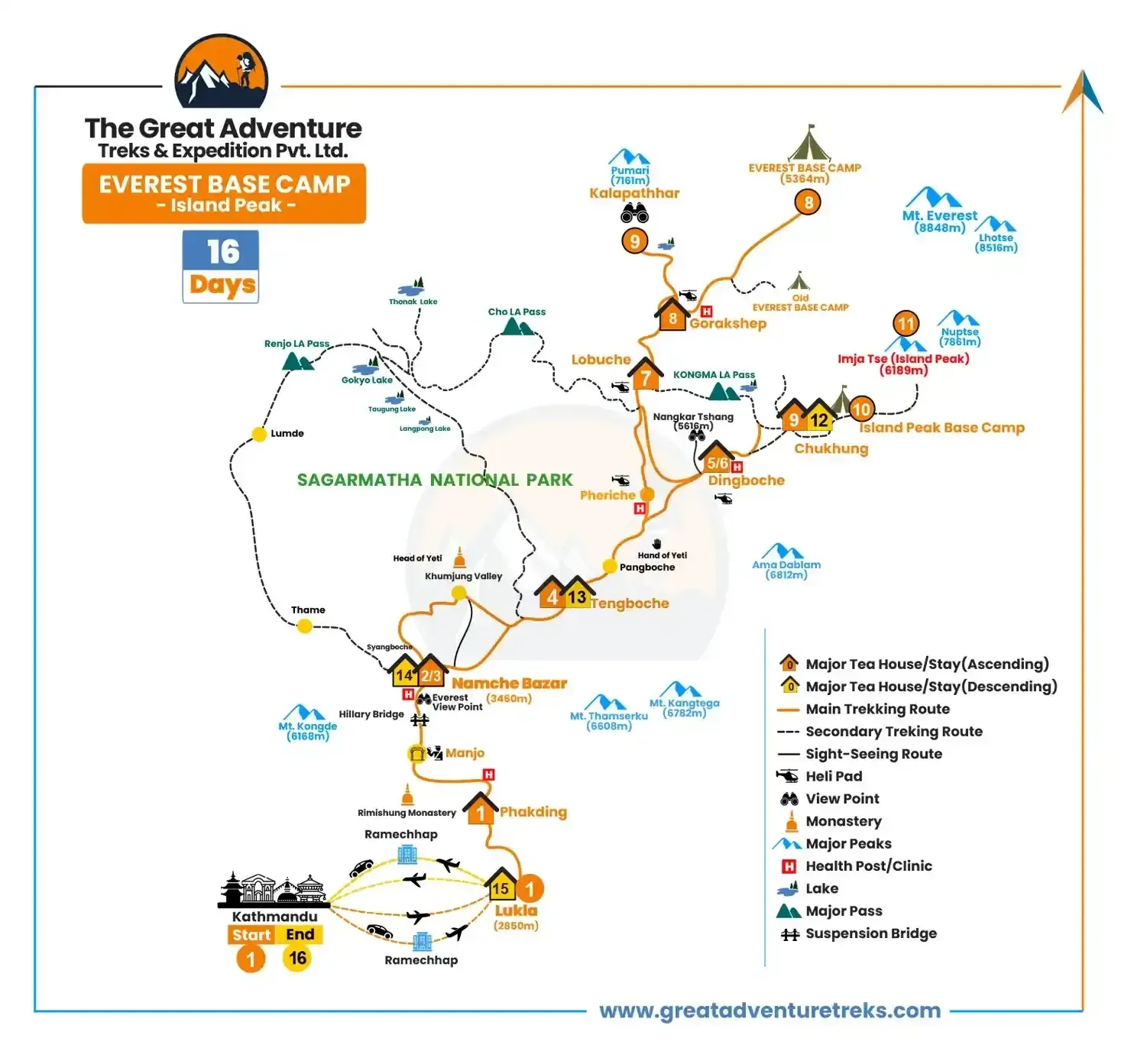
The Everest Base Camp with Island Peak trek is a unique and challenging adventure that combines the classic Everest Base Camp (EBC) trek with a thrilling summit of Island Peak (6,189m/20,299ft). This trek is ideal for those who want to experience the iconic Everest region while also challenging themselves with an exciting peak ascent. Here’s why this trek is a great choice:
1. Classic Everest Experience
This trek allows you to experience the beauty of the Everest region, visiting iconic destinations such as Everest Base Camp, Kala Patthar, and Gorak Shep. The trek offers stunning views of Mount Everest, Lhotse, Makalu, and Ama Dablam, providing a perfect introduction to the high Himalayas. Trekking to Everest Base Camp is a dream for many, and this itinerary brings you to the very foot of the world’s highest peak, offering a once-in-a-lifetime opportunity to stand at this legendary base.
2. Stunning Views of the Himalayas
Along with the Everest Base Camp trek, the added ascent to Island Peak gives trekkers an opportunity to see breathtaking panoramic views from even higher altitudes. From the summit of Island Peak, you get an expansive view of the Khumbu Icefall, Everest, Lhotse, Makalu, and Ama Dablam, making the experience even more rewarding and visually spectacular.
3. Challenging Island Peak Ascent
The trek stands out because it offers Island Peak, a non-technical but demanding climb that takes you to an elevation of 6,189 meters (20,299 feet). Island Peak, while not as difficult as some other Himalayan peaks, still requires the use of crampons, ice axes, and proper mountaineering techniques. For trekkers looking to push their limits and gain some mountaineering experience, summiting Island Peak is an exciting and achievable challenge. The combination of Everest Base Camp and Island Peak allows trekkers to experience both the world-famous trek and the thrill of mountaineering.
4. Acclimatization and Support
The itinerary is designed to allow for proper acclimatization. Days spent at Namche Bazaar, Dingboche, and Gorak Shep help your body adjust to the increasing altitude. The acclimatization at Dingboche and Gorak Shep, in particular, ensures that you are well-prepared for the summit of Island Peak. The itinerary provides sufficient time for rest and preparation, which is crucial for a successful climb of Island Peak.
5. Physical and Mental Challenge
The Island Peak climb is physically demanding, requiring trekkers to be in excellent physical condition. The high-altitude trek to Everest Base Camp combined with the technical challenges of Island Peak creates a rewarding experience that pushes your physical and mental endurance. The sense of achievement from summiting Island Peak after trekking through the Everest region is incredibly fulfilling, making this trek an ultimate adventure for trekkers looking for both a challenge and a sense of accomplishment.
6. Expert Guidance and Safety
This trek includes expert guides and porters, ensuring your safety and providing the necessary skills for the Island Peak climb. Your guides are experienced mountaineers and know the Everest region well. The support team helps with climbing techniques, route finding, and ensuring your safety at all times during the ascent. The presence of guides and porters makes the trek smoother and more manageable, allowing you to focus on the adventure.
7. Cultural Immersion
The trek also offers a great cultural experience, as you will pass through traditional Sherpa villages like Namche Bazaar, Tengboche, and Chukhung. These villages are rich in Sherpa culture, where you can learn about local customs, visit monasteries, and interact with the friendly Sherpa people. You will also have the chance to experience the spiritual significance of the Buddhist stupas and monasteries along the way, adding a deeper layer to the overall trekking experience.
8. Exclusive Experience
While the Everest Base Camp trek is one of the most popular treks in Nepal, the Island Peak portion adds an element of exclusivity. Not many trekkers venture beyond the standard EBC route to climb a peak, so Island Peak offers an opportunity to experience the Himalayas in a more personal and adventurous way, away from the crowds.