Best Season for Everest Base Camp Trek With Helicopter Return
The best seasons for the Everest Base Camp Trek with Helicopter Return are Spring (March to May) and Autumn (September to November). These periods offer stable weather, optimal trekking conditions, and spectacular views, making the journey to Everest Base Camp and the helicopter flight back even more enjoyable.
Spring (March to May)
- Weather and Visibility: Clear skies, stable weather, and comfortable temperatures make this an ideal time. Rhododendrons bloom along the trails, adding vibrant colors to the landscape.
- Views: Spring offers excellent views of the mountains, including Everest, Lhotse, and Ama Dablam.
- Crowds: This is one of the busiest seasons, so you’ll meet many trekkers along the route, adding to the vibrant trekking atmosphere.
Autumn (September to November)
- Weather and Visibility: The post-monsoon period brings crystal-clear skies and mild weather. After the rains, dust settles, giving clear, uninterrupted views of the mountains.
- Views: Autumn is famous for its breathtaking mountain scenery and stunning sunrise and sunset views, ideal for helicopter rides.
- Crowds: This is the most popular trekking season, so expect a lively atmosphere with plenty of fellow trekkers.
Other Seasons
- Winter (December to February): Possible but challenging due to cold temperatures and occasional snowfall, which can impact the helicopter flight.
- Monsoon (June to August): Generally avoided because of heavy rain, cloud cover, and slippery trails.
Trek Difficulty
The Everest Base Camp Trek has been labeled a ‘moderate’ trekking expedition, which means that there is no requirement for any technical skills or previous experience to do this Himalayan adventure. However, this is still a high-altitude adventure with several difficulty factors so it would be wise not to underestimate the challenges you might have to face during the trek. If you are unprepared for this expedition, you might make more sour memories than those you could treasure.
So, before you jump to any kind of conclusion, let’s check out some of the major contributing factors to the overall difficulty level of this epic Himalayan quest.
Altitude Sickness
Like any other high-altitude adventure, altitude sickness is one of the major concerns of this iconic Himalayan expedition as you spend a significant amount of time at altitudes above 4000-5000 meters. There are risks for the human body in catching altitude sickness, like Acute Mountain Sickness (AMS), High Altitude Pulmonary Edema (HAPE), and High Altitude Cerebral Edema (HACE) after climbing over an altitude of 2,500 meters.
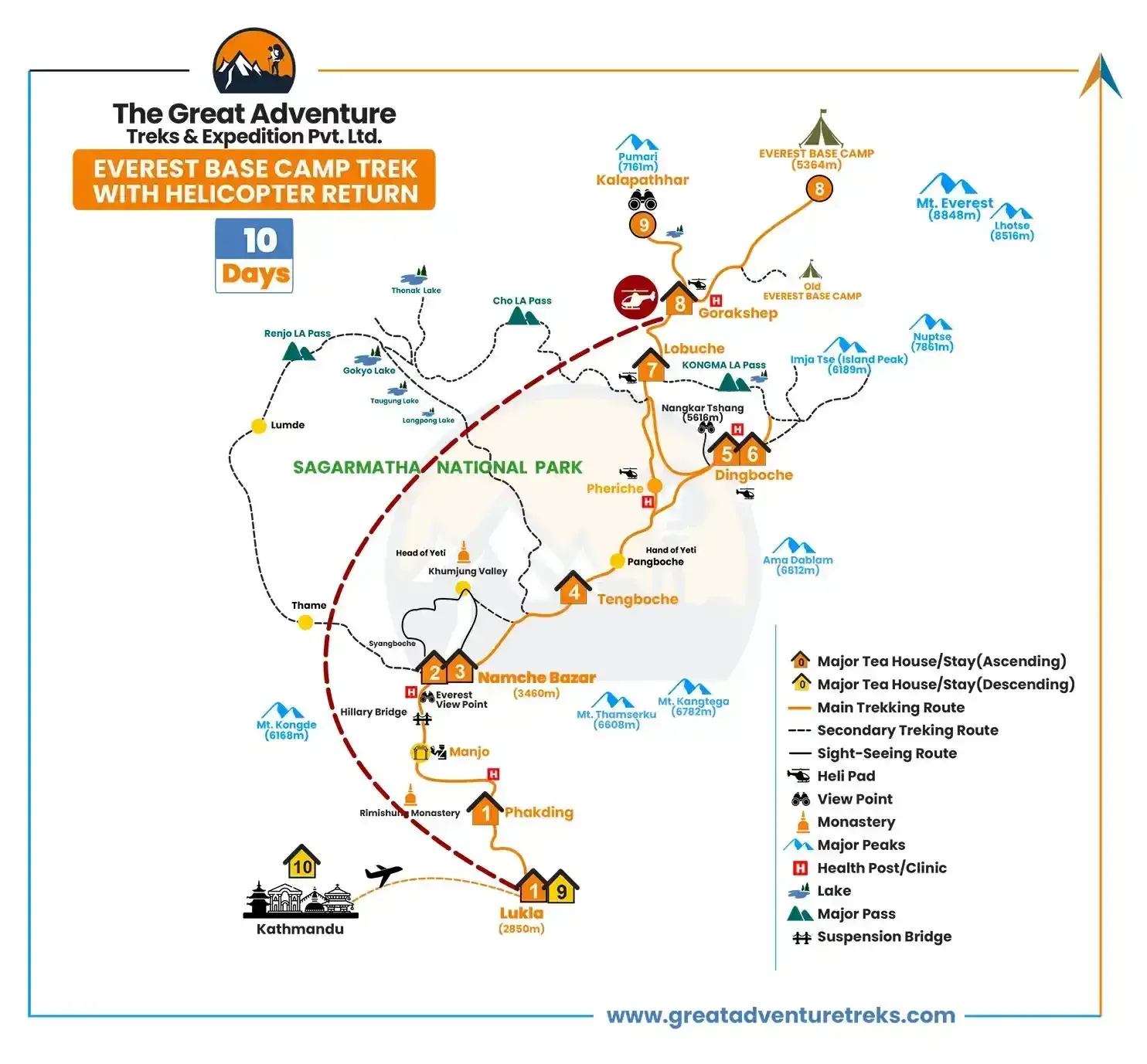
Thus, in this adventure that starts in Lukla at 2,840 meters, you will trek along several high-altitude points like Namche Bazaar (3,440 meters), Dingboche (4,410 meters), Lobuche (4,910 meters), Gorkashep (5,364 meters), Everest Base Camp (5,364 meters) and the highest elevation point of the entire expedition Kalapatthar at 5,645 meters. So you need to stay attentive for any kind of symptoms related to altitude sickness and consult the medical personnel of your expedition crew in case of any difficulties.
Trekking Route
In this glorious adventure of the Khumbu region, you will cover an approximate distance of 65 km (40 miles) starting at Lukla and moving all the way to Everest Base Camp. However, as this trekking package has a helicopter return flight from Gorakshep, you don’t have to cover another 65 km to retrace your steps back to Lukla for a flight back, which would have totaled about 130 km (80 miles) distance. Regardless, you will be trekking on remote, rugged trails of the Himalayan region for about 6- 7 hours on average during this expedition.
Even though it is a slow-paced adventure, covering that much distance at a rising altitude is not an easy feat. Plus if you haven’t prepared adequately, then this high-altitude adventure might take a heavy toll on your body.
Remoteness
This Everest Base Camp Trek With Helicopter Return is a remote exploration, it doesn’t only mean that you will be traversing across the remote and secluded segment of the Himalayan region. But, the overall region is pretty much underdeveloped as there is no proper mode of transportation in the region, aeroplane flights, porters, mules, and yaks are the primary source of transport in this region.
Therefore, you can see how much the lack of a reliable transportation mode has slowed down the overall development of the region. There aren’t any proper medical facilities in the region, and even the basic facilities are very far apart, the same goes for other luxurious amenities. Even the electricity is limited to lower regions only, at the higher altitudes the settlements are dependent on solar power. So, don’t expect services and amenities like an exotic vacation destination during this trek in the Himalayas.
Khumbu Cough
If you have done Everest Base Camp Trekking before then you might be familiar with the bothersome health conditions that trekkers catch after entering the heart of the Khumbu region. It’s a bothersome coughing condition that trekkers usually catch after getting exposed to the dry and cold climatic conditions of the Himalayas as you get closer to them. You might be wondering why is it troublesome and if it is just a cough, however unlike seasonal coughing, Khumbu cough can last several weeks and even a month depending on the immunity of the individuals.
Generally, trekkers catch this condition if they haven’t packed well to deal with the cold climatic conditions of the Himalayas, haven’t eaten a balanced diet, rested properly, or stayed hydrated throughout the expedition.
Acclimatization
When it comes to any kind of long high-altitude adventure, the number of acclimatization days you receive will determine the overall trekking difficulty. The same goes for the Everest Base Camp Trek, when you are climbing over a significant altitude during each day of your expedition, your body needs enough time to replenish the lost energy. Proceeding along the trekking trail without giving your body a chance to get proper rest doesn’t only complicate the acclimatization process but also gravely affects your physical condition resulting in exhaustion.
You can directly relate the overall success rate of any kind of high-altitude adventure directly to the number of acclimatization days you get. During a high-altitude adventure, it is recommended that you shouldn’t push for more than 500 meters of altitude in a day and take an acclimatization day every time after climbing over an altitude of 1,000 meters.
Is Everest Base Camp Trek With Helicopter Return for Me?
The difficulty level of Everest Base Camp Trek is at a ‘moderate’ level, although you don’t need any kind of experience or skills to do this trek, you need to be physically prepared to overcome the difficulty factors. So to answer your question, if you have a basic level of fitness and good health condition, you will be able to easily complete this expedition, just don’t miss out on the training part for a more comfortable experience.
Even if you have some sort of medical condition, you can consult your doctor and trekking guide if you are fit for this trek or not. Due to the return journey by chartered helicopter flight from Goraskhep, this package significantly cuts off the trekking difficulty by half as you don’t have to trek down to Lukla. Even on the regular route with return trekking back to Lukla from Everest Base Camp, the success rate is at 95% to 97%, even 70-year-olds and children under the age of 10 completed those treks effortlessly.
So statistically you will be able to easily enjoy this iconic expedition and return in style enjoying the breathtaking aerial views of the Himalayas which shaves off the efforts you have to put in by as well as the difficulty factors in this trek. Just don’t slack off during your preparation period and train earnestly for a more enjoyable and immersive experience.
Note: The recommended training period for Everest Base Camp Trek With Helicopter Return is about 4- 6 weeks. Focussing on strength and endurance training is very fruitful during the actual expedition and doing practice hikes on the natural landscaper carrying backpack is recommended as it replicates the actual steep terrains you have to overcome.
Why Everest Base Camp Trek with helicopter return?
The Everest Base Camp Trek with Helicopter Return combines the adventure of trekking through the iconic Himalayas with the luxury and ease of a scenic helicopter flight back, making it an excellent option for trekkers looking for an efficient yet thrilling experience. Here’s why this option has become a popular choice:
1. Experience Both Trekking and Aerial Views
- The trek to Everest Base Camp is known for its dramatic landscapes, ancient Sherpa villages, and breathtaking views of the world’s highest peaks. By trekking up to the base camp, you experience the journey and immerse yourself in the culture and beauty of the Khumbu region.
- The helicopter return offers a once-in-a-lifetime bird’s-eye view of Everest and surrounding peaks, letting you enjoy the grandeur of the Himalayas from the sky and providing a different perspective on your trek.
2. Saves Time
- A helicopter return saves approximately 4–5 days on the return trek, allowing trekkers with limited time to complete the iconic trek within a shorter timeframe. Instead of spending extra days walking back, you can return directly to Lukla or even Kathmandu, making it a more efficient option for busy schedules.
3. Convenient and Comfortable Return
- After days of trekking, the return flight offers a comfortable and convenient way back, reducing the physical toll on the body. The helicopter flight eliminates the need for a physically demanding descent, which can be especially appealing to trekkers who find the trek up challenging enough.
4. Ideal for Safety and Flexibility
- The helicopter return adds a safety buffer for trekkers as it allows a quick descent to lower altitudes, reducing the risk of altitude sickness. This quick descent can also be a valuable option for those who might feel unwell or need immediate access to lower altitudes after reaching base camp.
5. Memorable Aerial Photography and Views
- The scenic flight provides stunning opportunities for aerial photography of Everest, glaciers, and the Khumbu region. The helicopter ride creates lasting memories, allowing you to capture some of the most impressive scenery in the world.
6. Perfect for First-Time Trekkers
- For those new to trekking at high altitudes, the Everest Base Camp Trek with Helicopter Return allows a balanced experience. You gain the full trekking experience up to base camp, and then a scenic, efficient, and less physically taxing helicopter ride back down.
Things you should avoid during Everest Base Camp Trek:
- Avoid Rushing the Trek – Take time to acclimatize and avoid pushing too hard, which increases the risk of altitude sickness.
- Don’t Underestimate Hydration – Keep hydrated throughout the trek, but avoid drinking untreated water from streams or rivers.
- Avoid Heavy Backpacks – Pack only essentials, as carrying excess weight can tire you out quickly.
- Avoid Skipping Acclimatization Days – These days are crucial for adjusting to high altitudes and can help prevent altitude sickness.
- Don’t Ignore Weather Warnings – Himalayan weather is unpredictable; pay attention to local guides and forecasts.
- Avoid Over-Reliance on Electronics – Bring backup power sources as charging facilities are limited and often costly in remote areas.
- Don’t Litter – The pristine environment is fragile, so avoid leaving any waste behind.
- Avoid Wearing Inappropriate Clothing – Wear proper layers suited for cold, wind, and variable mountain weather.
- Avoid Consuming Excessive Alcohol – Alcohol dehydrates the body and can worsen altitude sickness symptoms.
- Don’t Neglect Sunscreen and Sunglasses – The sun is intense at high altitudes, so protect your skin and eyes from UV rays