

The Everest Base Camp (EBC) trek is one of the most iconic adventures in the world, attracting thousands of trekkers each year. But how long does it actually take to complete this journey? The duration of the trek can vary depending on your itinerary, pace, and acclimatization needs. Let’s break it down to give you a clear picture.
Typical Duration of the Everest Base Camp Trek
A standard Everest Base Camp trek takes 12-14 days to complete. This timeline includes trekking to the base camp, acclimatization days, and the return journey. Here’s a detailed overview:
- Trekking Days : The trek from Lukla to Everest Base Camp and back typically takes 8-10 days.
- Acclimatization Days : At least two acclimatization days are included—one at Namche Bazaar and another at Dingboche—to help your body adjust to the high altitude.
- Travel Days : Flights to and from Lukla, the gateway to the trek, add two additional days to your itinerary.
In total, the trek is designed to ensure a safe and enjoyable experience, minimizing the risk of altitude sickness while allowing time to soak in the breathtaking Himalayan scenery
Day-by-Day Itinerary:
Here is a standard 12-day itinerary for the Everest Base Camp trek:
Day 1: Fly to Lukla and Trek to Phakding
- Duration : 3-4 hours
- Highlights : Scenic flight to Lukla, gentle hike through lush valleys.
- Altitude : 2,651m (8,695 ft)
Day 2: Trek from Phakding to Namche Bazaar
- Duration : 5-6 hours
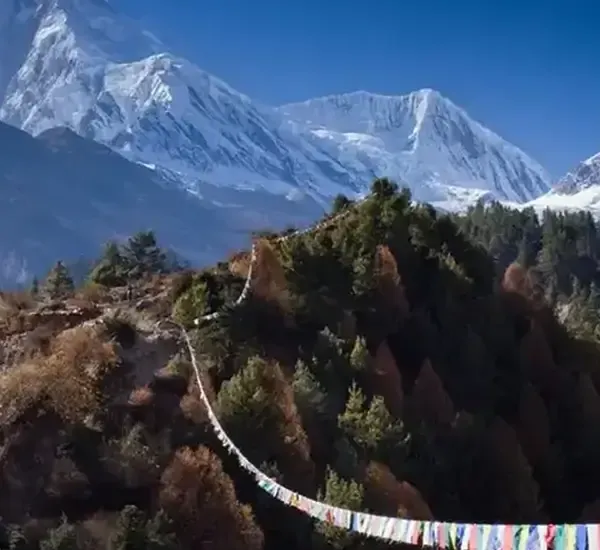
- Highlights : Crossing suspension bridges and entering the bustling hub of Namche Bazaar.
- Altitude : 3,430m (11,283 ft)
Day 3: Acclimatization Day at Namche Bazaar
- Activities : Short hikes to Everest View Hotel or Khumjung village.
- Altitude : 3,430m (11,283 ft)
Day 4: Trek to Tengboche
- Duration : 5-6 hours
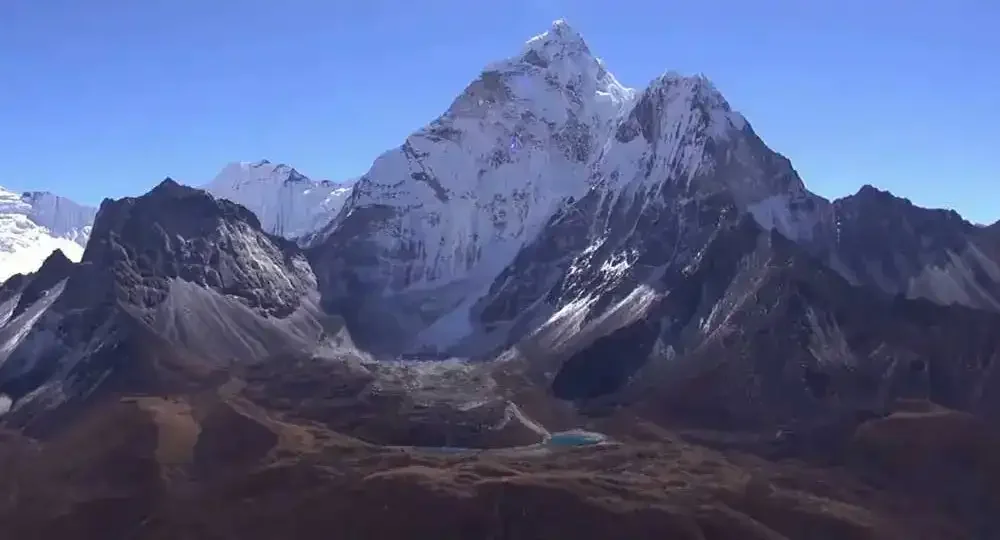
- Highlights : Visit Tengboche Monastery, with stunning views of Everest and Ama Dablam.
- Altitude : 3,870m (12,694 ft)
Day 5: Trek to Dingboche
- Duration : 5-6 hours
- Highlights : Trek through alpine landscapes and small villages.
- Altitude : 4,360m (14,300 ft)
Day 6: Acclimatization Day at Dingboche
- Activities : Optional hike to Nagarjun Hill for panoramic mountain views.
- Altitude : 4,360m (14,300 ft)
Day 7: Trek to Lobuche
- Duration : 5-6 hours
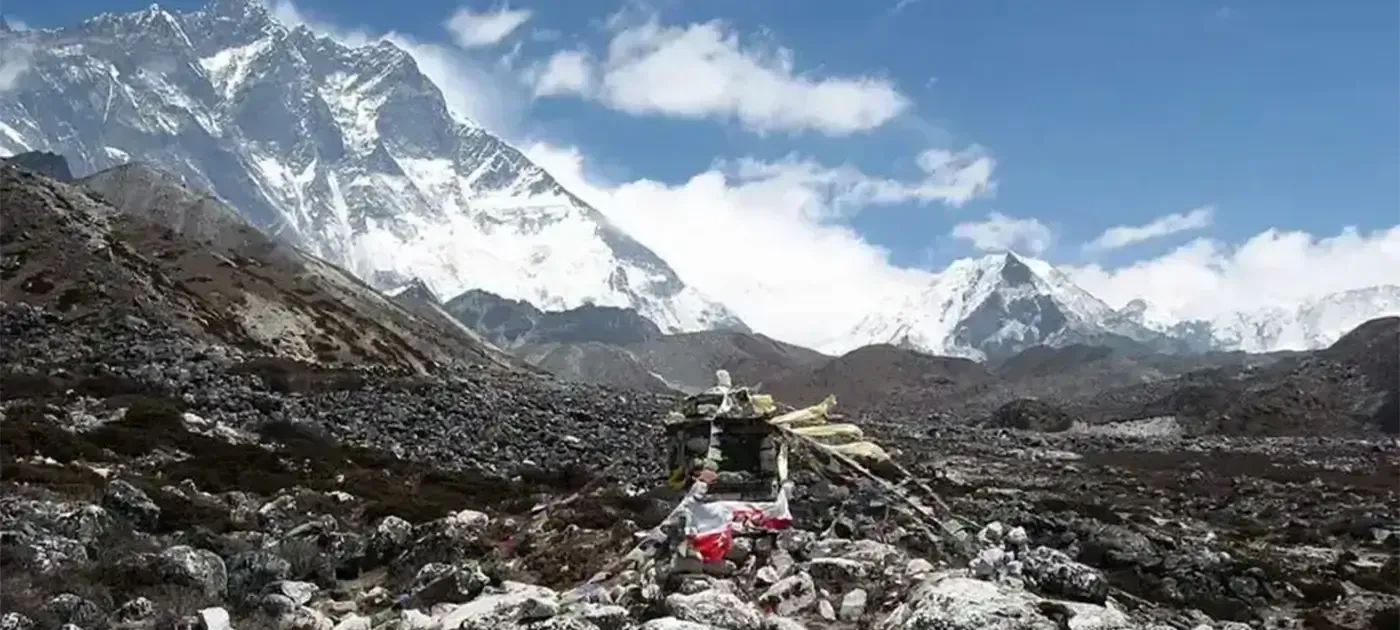
- Highlights : Pass through the climbers’ memorials at Thukla.
- Altitude : 4,940m (16,203 ft)
Day 8: Trek to Gorak Shep and Visit Everest Base Camp
- Duration : 6-7 hours
- Highlights : Stand at the iconic Everest Base Camp.
- Altitude : Gorak Shep (5,170m/16,957ft), Everest Base Camp (5,364m/17,594ft)
Day 9: Trek to Kala Patthar and Descend to Pheriche
- Duration : 7-8 hours
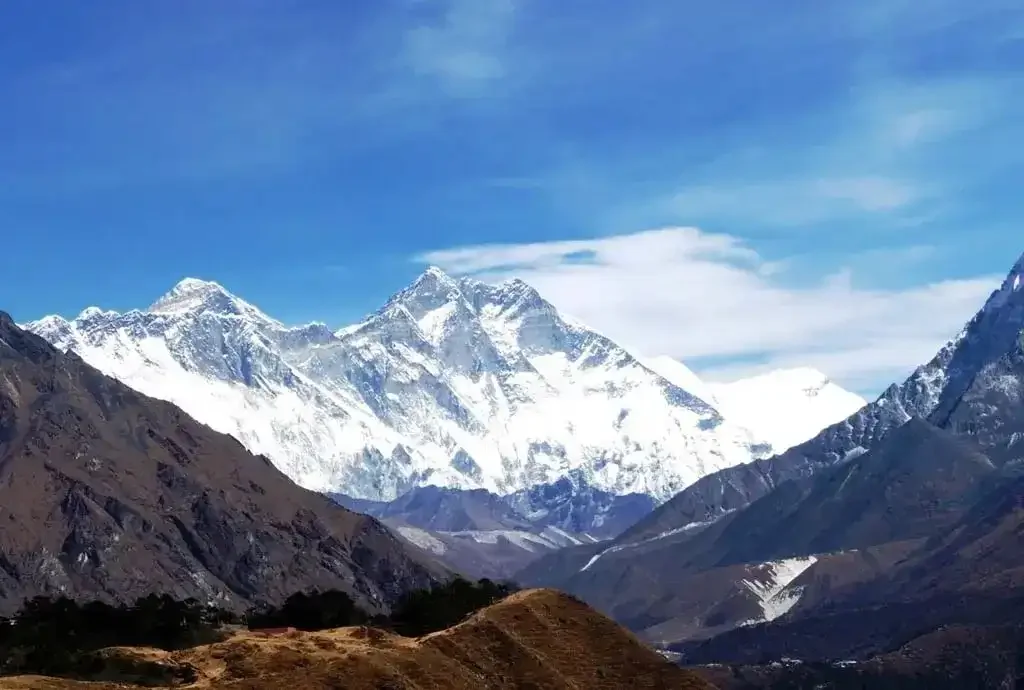
- Highlights : Witness sunrise views of Everest from Kala Patthar.
- Altitude : Kala Patthar (5,545m/18,187ft), Pheriche (4,288m/14,264ft)
Day 10: Trek to Namche Bazaar
- Duration : 6-7 hours
- Highlights : Retrace your steps through the Khumbu Valley.
- Altitude : 3,430m (11,283 ft)
Day 11: Trek to Lukla
- Duration : 6-7 hours
- Highlights : Celebrate the completion of your trek.
- Altitude : 2,860m (9,383 ft)
Day 12: Fly Back to Kathmandu
- Highlights : Enjoy a final scenic flight over the Himalayas.
Factors That Can Affect Trek Duration
Several factors can influence how long it takes to complete the Everest Base Camp trek:
- Acclimatization Needs : Some trekkers may require additional acclimatization days, extending the trip to 14-16 days.
- Pace : Your trekking speed and fitness level can impact daily trekking times.
- Weather Conditions : Flights to and from Lukla are weather-dependent and can cause delays.
- Custom Itineraries : Private or guided treks may offer customized itineraries, either shortening or lengthening the trek.
Alternative Itineraries:
- Shortened Trek : If you’re short on time, some trekkers opt for helicopter rides from Gorak Shep back to Lukla, reducing the trek by 2-3 days.
- Extended Trek : Adding side trips to places like Gokyo Lakes or the Three Passes Trek can extend the journey to 18-20 days.
Highlights of the Trek
 Everest Base Camp Trek in October
1. Tengboche Monastery
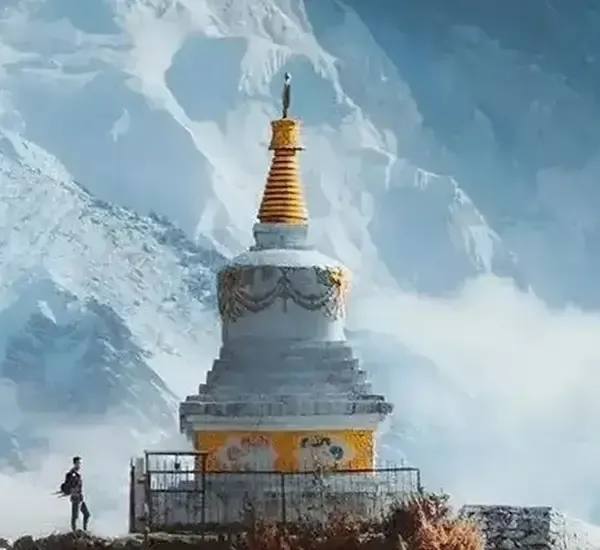
Tengboche Monastery is a major sight down the road to Everest Base Camp trek. It’s the most beloved religious site in all Khumbu Region with unspoiled history, ancient monuments, and stone statues.
Built-in 1916 at 3,867 meters high, the Tengboche monastery displays ancient Tibetan art and culture. It’s one of the oldest pilgrimages in the region with a gorgeous landscape, closeup view of Ama Dablam behind the construction.
A quick tour of the monastery is held every evening for visitors to offer prayers and receive blessings. On the occasion of Mani Rimdu, visitors join local Sherpa to celebrate the festival. Together they perform folk dance, play religious songs, and depict well-known figures.
2. Sagarmatha National Park
It’s impossible to think of Everest Base Camp without Sagarmatha National Park. Listed in World Heritage sites, the sanctuary has embraced Mt. Everest and its neighboring peak. It’s been habitat to a number of wild animals including Blue Sheep, Himalayan Tahr, and snow leopard.
Spanned in an area of 1,148 sq. km., the park is abode to more than 118 species of birds and unique vegetation. Forests at the lower elevation are covered with juniper, pines, and hemlock. But after coming at a higher altitude, the plant confines within mosses and lichens.
3. Kala Patthar
Kala Patthar is the greatest delight to eyes during Everest Base Camp trek. Everyone who visits the camp never skips the walk to this beautiful rock mountain. Soaring to an altitude of 5,644 meters , Kala Patthar offers a breathtaking view. Those who reach atop the mountain will get to glance at Mt. Everest, catch the sight of Chhukung valley, and tranquil lakes.
When is the best time to do Everest Base Camp trek?
 7 days everest base camp trek
No one knows the worth of time and weather better than a wanderer who’s mostly on the road. It’s the atmospheric condition that shapes the journey of a traveler and assesses how far he will go on the trail.
Trekkers on Everest Base Camp realize the significance of weather even more as it can halt the trip for as long as a week. Therefore, most of the travelers flock to Lukla during Autumn when the weather is beautiful and bright.
As the season falls right next to Monsoon, the weather in Autumn is moist with a little rainfall at the start of September. The fall foliage starts appearing from the month’s end, with forests decked in chromatic colored leaves.
As expected, the sky is clear during Autumn; thus, you can traverse the alleyway anytime you like. October has the most delightful weather of all, with moving views into the valley below and up. With the Hindu’s main festival just around the corner, the whole town is in a holiday spirit.
Another lovely time of the year to be in and around the base camp is Spring. The season endures pleasant weather, perfect for walking the trail and exploring magnificent sceneries. With a non-skid, rough path to walk in the season, trekkers can complete the excursion in a couple of days.
Scents of spring can be whiffed from mid-march through blossomed Rhododendron and wildflowers. In the pre-season, the weather is a bit cold with traces of winter left hither and thither. But in October, it’s warm and satisfying with the average temperature at 12 Degree Celsius.
Winter and monsoon aren’t the best times to visit Everest Base Camp, but that doesn’t mean it’s not doable. It takes nothing to plan the trip during winter except with extra precaution and care while traveling the trail. The weather is bitterly cold in winter, with the temperature reaching minus. So, we recommend bringing warm insulated clothes and mountaineering boots.
Accommodation and Foods at Everest Base Camp Trek
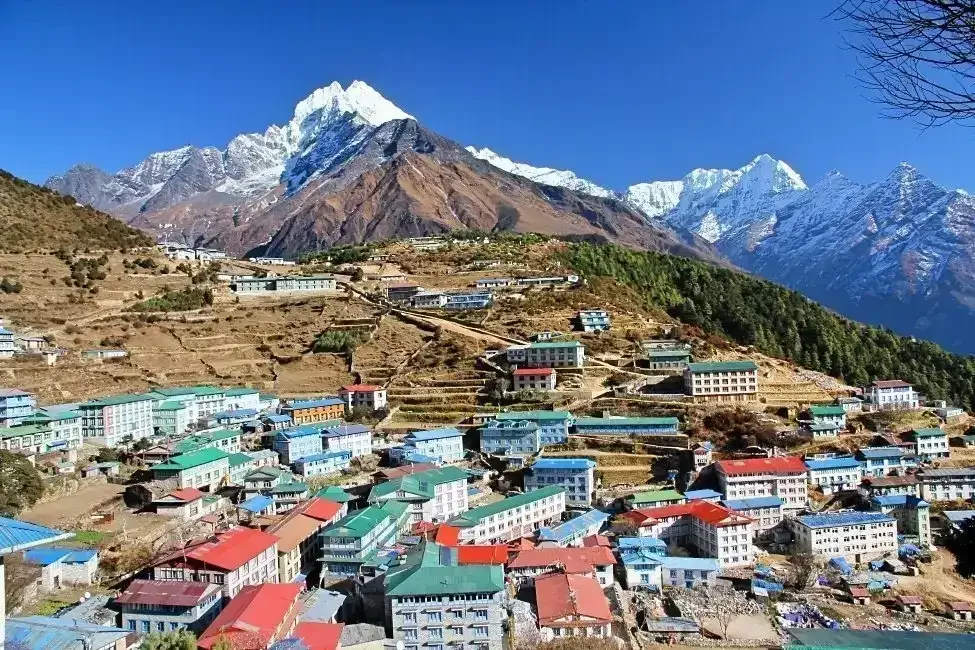 Getting There in Spring and Autumn Seasons
Everest Base Camp trek isn’t a fun outing of a day or two to finish in the blink of an eye. With a trek distance of 38.8 km excluding a round trip to and fro Lukla, the trek takes roughly two weeks to complete. Given how long the course is, Everest Base Camp trek deserves a preparation of about a week advance.
Accommodation can be a real deal if not booked early during the prime trekking season. Visitors from all around the world turn up to the region in autumn and spring to have their chance of touring Everest Base Camp. The trail is packed with people, and so is the hotel and lodges, which most of them make early reservations.
Tea houses are standard and cheaper accommodations in villages at higher elevations. Its amenities are pretty basic with options of single or double bedrooms, a clean bed sheet, and a pillow. Some operators also provide a woolen blanket and towel, but most of the time, they’re not available.
Hot showers are pricey and cost extra dollars, having not been covered by the agency. The choices for dwelling also includes standard guesthouses and lodges. They are relatively more expensive, having well-furnished rooms with ensuite facilities.
Foods served in teahouses and lodges are surprisingly tasty despite not much use of spices. Vegetables are freshly picked from the backyard farm and prepared well. There is not much variety in foods with most dined local Nepali food, rice, veggies, pulses, and pickles.
For a change, you can also have stir-fried noodles, Chinese dumplings, and vegetable soup. But remember, they don’t cost as equal as that in Kathmandu due to inaccessibility. For breakfast, they provide special milk tea, muesli, and bread to eat.
Similar articles you may like:
- Everest base camp trek difficulty
- Annapurna Circuit Trek vs Everest Base Camp Trek
- Everest Trek In March - April
Preparations and Essentials for Everest Base Camp Trek
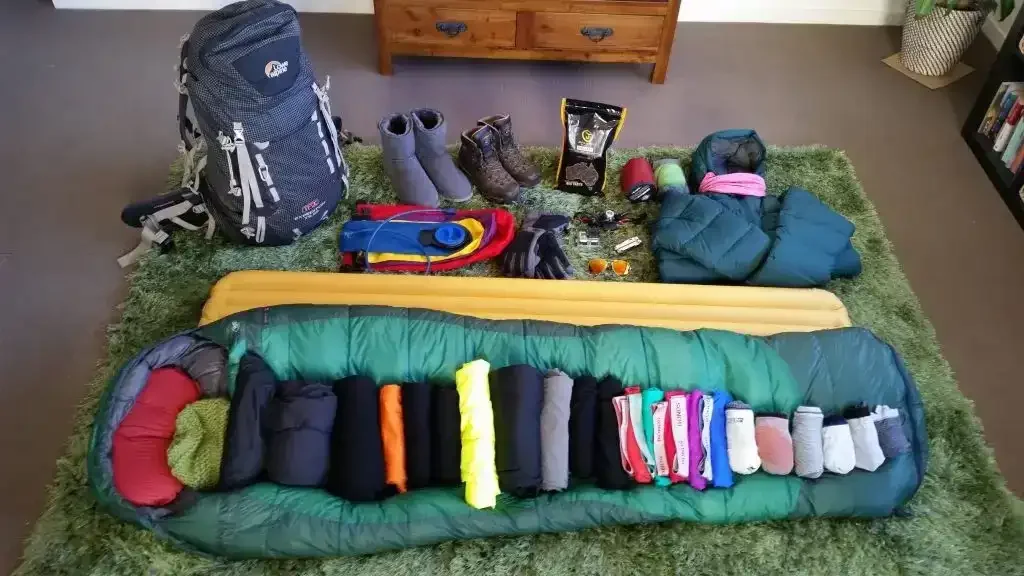 Everest base camp gear
Everest Base Camp Trek is never an easy walk. It takes a lot of physical strength and endurance power to walk vertical hills over big rocks and stones. The climb above ground level is equally exhausting and takes hours on end to overcome.
Hence, the trekker must have enough physical resistance to travel at a constant speed on the hike. It’s impossible to walk even a mile if your body can’t take the high-intensity physical challenges. Technical skills are vital to withstand the rough trail of Everest Base Camp; therefore, trekkers must follow intense training exercises.
Improve your fitness level by developing personalized fitness training or spending quality time in the gym. Aerobic exercise helps generate energy through metabolism to minimize the risk of altitude sickness.
Play smart and take a short hike more frequently before the trek to repel drowsiness. Core exercise and yoga also improves flexibility and helps in balancing the muscles while scrambling higher altitude.
Don’t forget that before planning the fitness regimen, you must be conscious of how long to walk to Everest Base Camp. By doing so, you’ll be able to prepare the trek more precisely.
You can check here- Everest Base Camp Training Program to know much better how to train yourself for the trek.
Mental Preparation
Strong mental health is the key to well-being and a positive spirit. Without moral fibre, there’s no way you can put up with the strain of Everest Base Camp. The difficulties involved in the trek can justly cause a mental breakdown amidst trekkers. Thus, hikers have to be psychologically fit as much as physical before reaching out to the trail.
One of the best ways to prevent illness is to boost low self-esteem and prepare well. Acute mountain sickness is a real challenge to prevail over. It often shakes the confidence of hikers forcing them to quit the trek, so you hold it together.
Packing Essentials
After done with the preparations, it’s time to move into the trekking gears needed for Everest Base Camp. And by apparatus, we mean everything from clothing to camping gear and accessories. Shopping for the base camp trek is greatly affected by the season you’re trekking.
For winter, you have to get more woolen clothes with insulated hiking boots. Meanwhile, in autumn and spring, the weather in mid-season is relatively hot, so it’s better to pack light clothes that absorb sweat. Trekking poles are the best ally of hikers on a long-distance trek, so make sure you have one of those pairs.
Clothing
- Lightweight cotton clothes which soak sweat
- Moisture-wicking long-sleeve shirt and t-shirt
- Waterproof rain jacket
- Trekking trousers and short
- Sun-shielding hat during summer
Footwear
- Premium quality mountaineering boots
- A pair of synthetic socks (at least two)
- Hiking boots suited to the terrain
Miscellaneous and other items
- Refillable water bottle and Bottle Holder to prevent dehydration
- Trekking poles to climb the steep hill
- Sunglasses to avoid heat
- First-aid kit and hand sanitizer
- Portable power device and charger
You may also like: